
Start here:
Understanding Anal Fissures
Whether you’ve just been diagnosed, suspect you may have a fissure, or have been dealing with symptoms for a while, this is a good place to begin. Learn what an anal fissure is, why it can hurt so much, and what the recovery process may look like.
What is an anal fissure?
An anal fissure is a small tear in the thin tissue lining the opening of the anus. It often develops after passing a hard or large bowel movement, but diarrhea, childbirth, muscle tension, and other factors can also contribute.
Although the tear itself may be small, the pain can feel anything but small. The muscles surrounding the area can tighten or spasm, which may contribute to pain during and after a bowel movement and can make healing more difficult
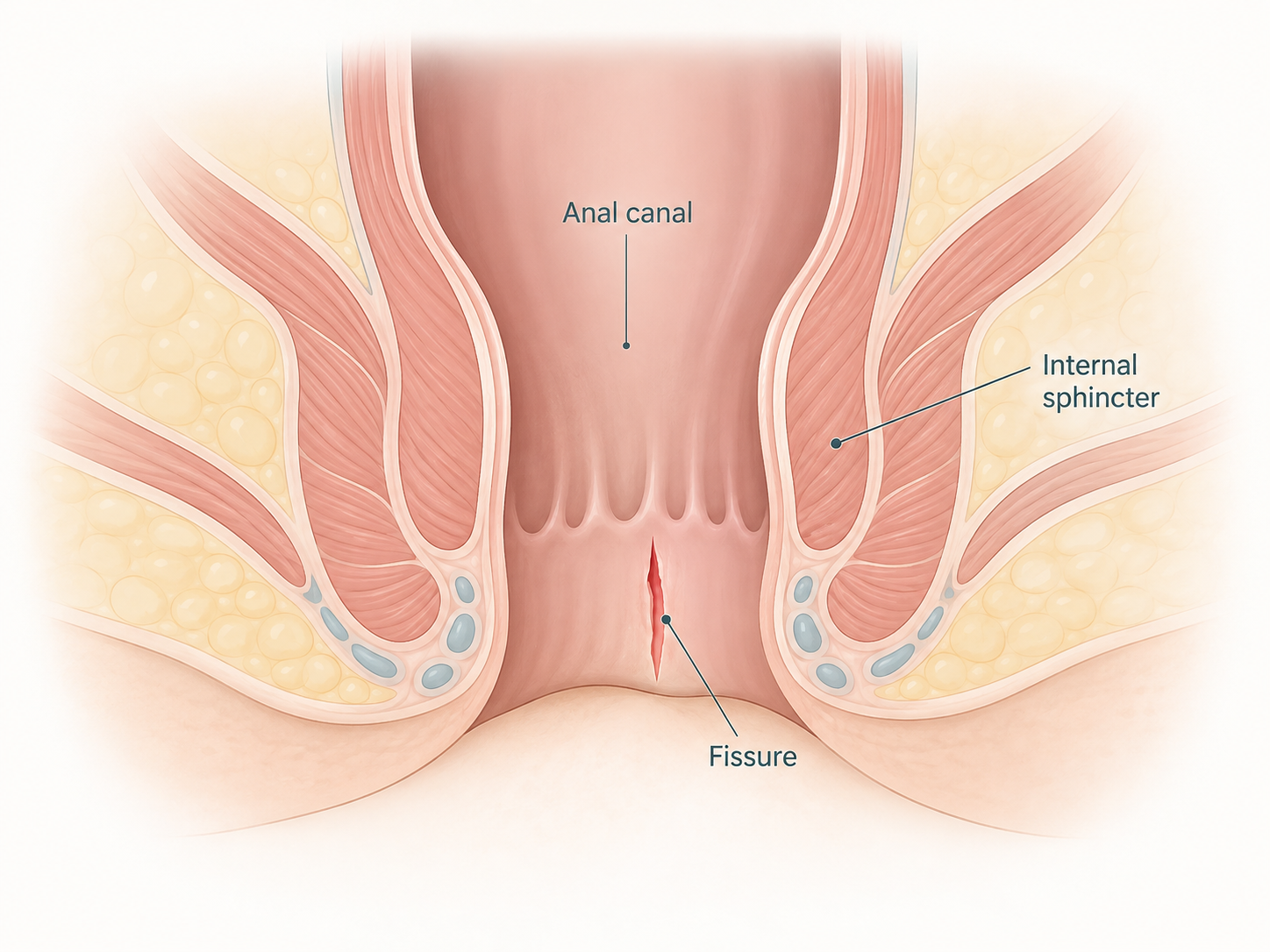
Acute vs. Chronic Anal Fissures
Anal fissures are often described as acute or chronic based on how long they’ve been present and whether longer-term changes have developed. Knowing the difference can help you understand why some fissures heal with conservative care while others may need additional medical treatment.
Acute Fissure
An acute fissure is a newer tear that has usually been present for less than about 6 weeks.
It may develop after:
Passing a hard or large stool
Constipation or straining
Frequent diarrhea
Childbirth or postpartum bowel changes
Irritation or trauma to the area
Common experiences may include:
Sharp or burning pain during a bowel movement
Pain that continues afterward
Bright red blood on toilet paper or the outside of the stool
Fear or tension around having another bowel movement
Many acute fissures improve when the cycle of hard stool, pain, and muscle tension is interrupted.
Chronic Fissure
A fissure is generally considered chronic when it has persisted for around 6 weeks or longer, although clinicians may also look for physical signs that suggest the fissure has been present for some time.
With a chronic fissure, repeated pain and tightening of the internal anal sphincter may contribute to reduced blood flow and make healing more difficult.
Chronic fissures may be associated with:
Pain that repeatedly returns or never fully resolves
A fissure that seems to heal and then reopen
Ongoing muscle spasm or tightness
A small external skin tag sometimes called a sentinel tag
Changes in the tissue around the fissure
Chronic does not mean permanent. It often means the area may need additional support to interrupt the pain–spasm–reinjury cycle.
The timeline is only part of the picture.
A healthcare professional may also consider what the fissure looks like, how long symptoms have been occurring, whether muscle spasm is present, and whether other conditions need to be ruled out.
Why Can an Anal Fissure Hurt So Much?
The tear itself is only part of the problem. Pain can trigger the internal anal sphincter to tighten or spasm. That tension can make bowel movements more painful and may reduce blood flow to the area, which can make healing harder.
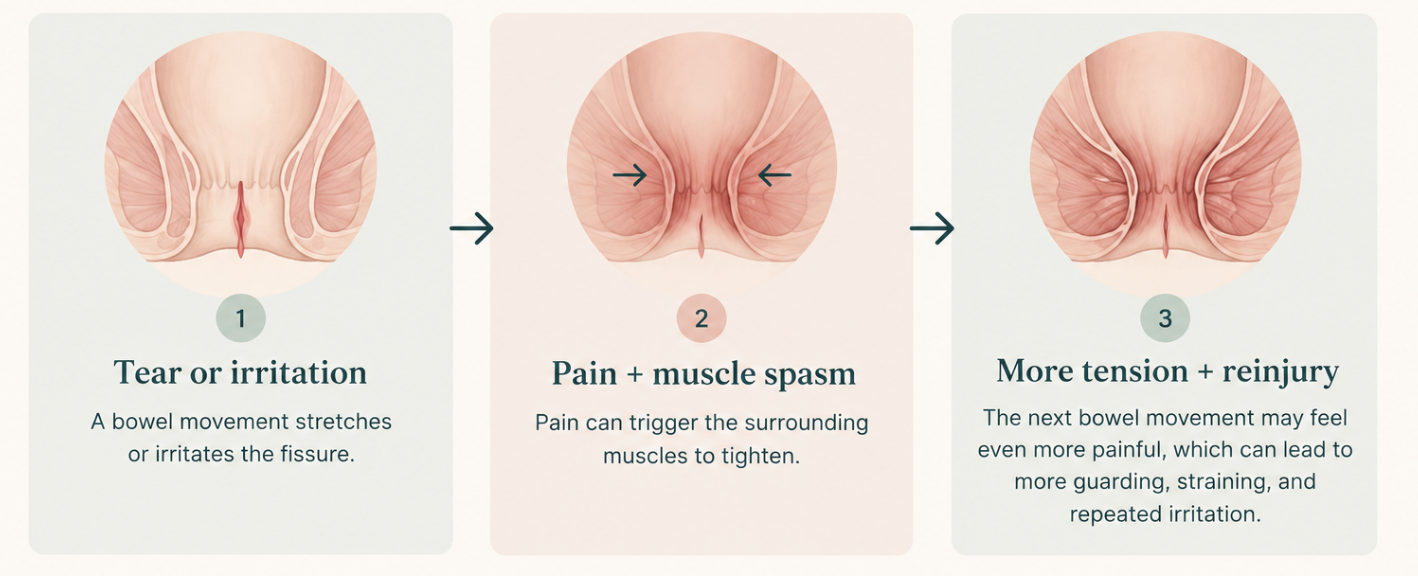
This is why “just relax” can be easier said than done.
When your body begins to expect pain, it may start bracing before a bowel movement even begins. Supporting softer stool, avoiding straining, using gentle relaxation techniques, and getting medical treatment when needed can all help interrupt this cycle.
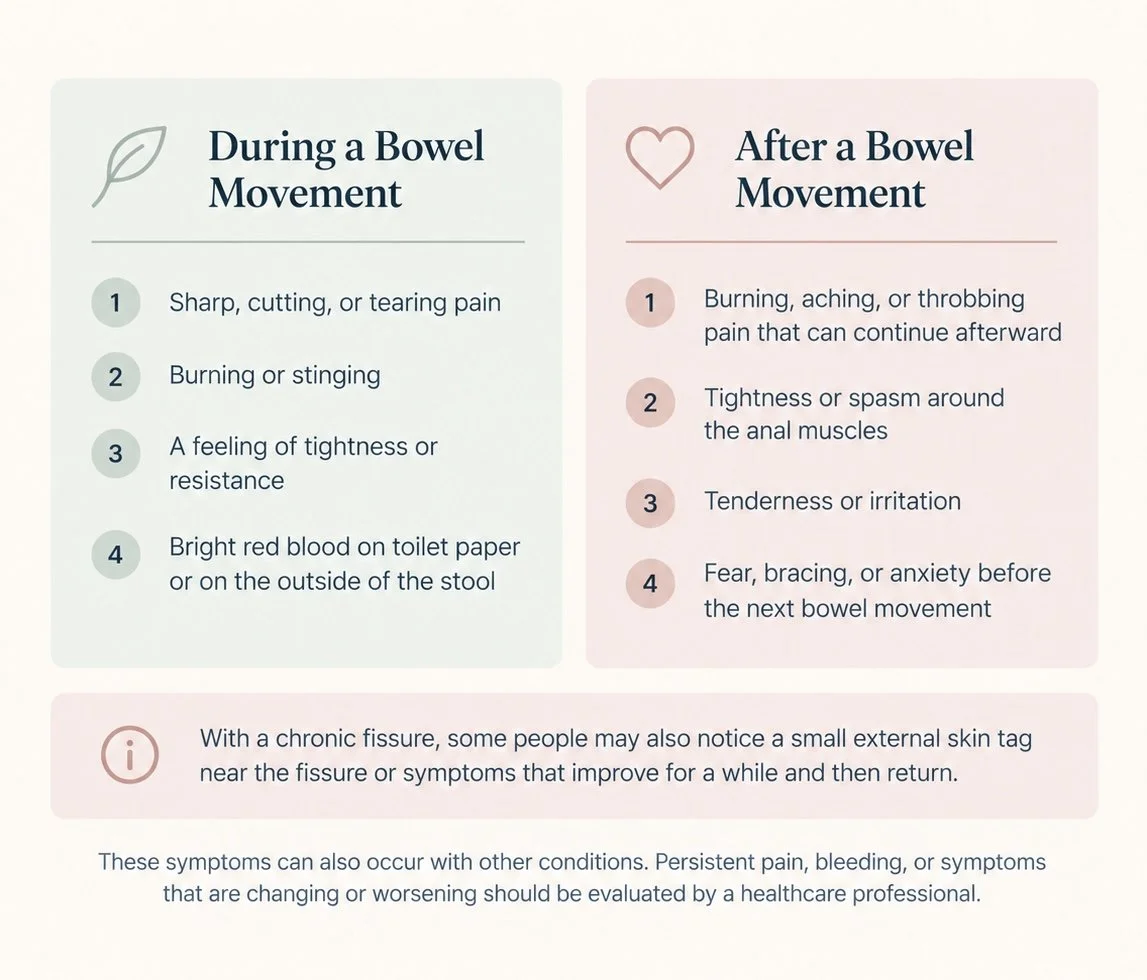
What Symptoms Are Common?
Anal fissure symptoms can vary, but many people notice a recognizable pattern around bowel movements. You may experience some of these symptoms without having all of them.
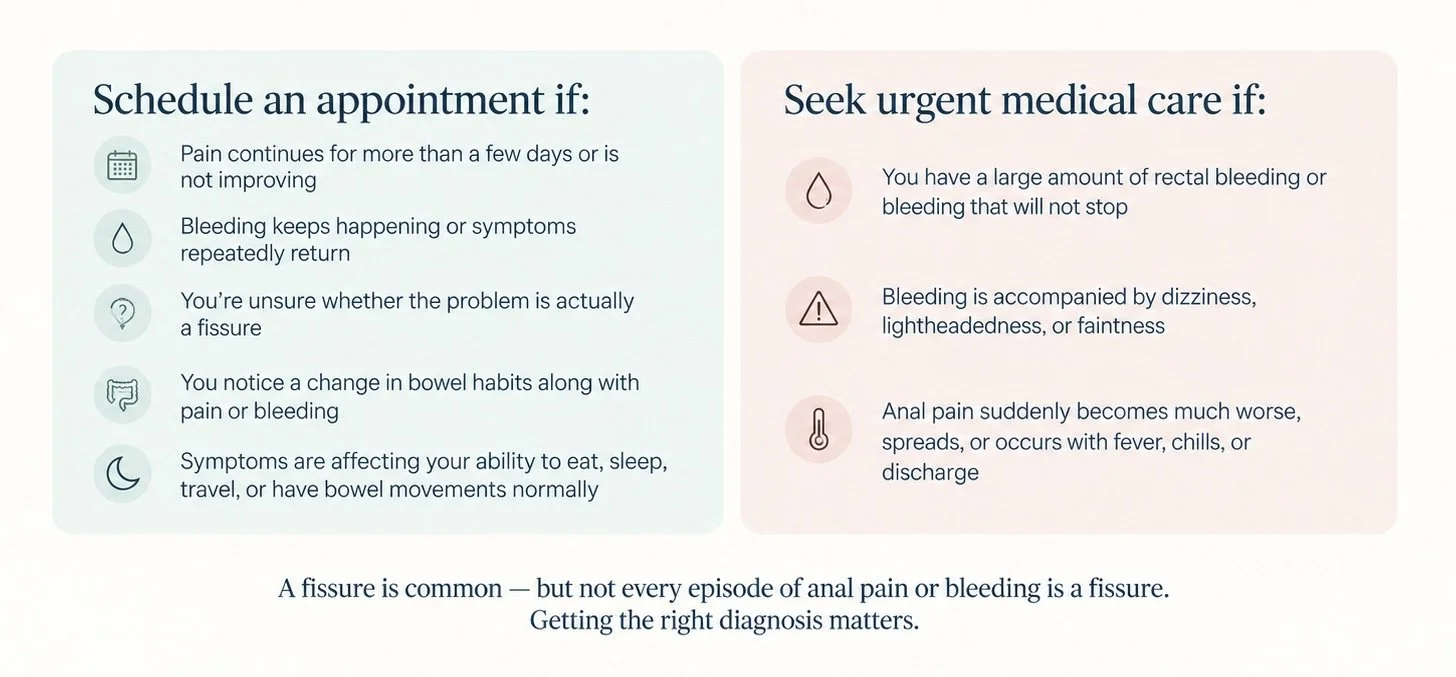
When Should I See a Healthcare Professional?
Anal fissures can sometimes improve with simple self-care, but persistent pain or bleeding should still be evaluated so you can confirm the diagnosis and rule out other causes. Mayo Clinic specifically advises seeing a healthcare professional for pain during bowel movements or blood on stool or toilet paper.
What Does Treatment Usually Look Like?
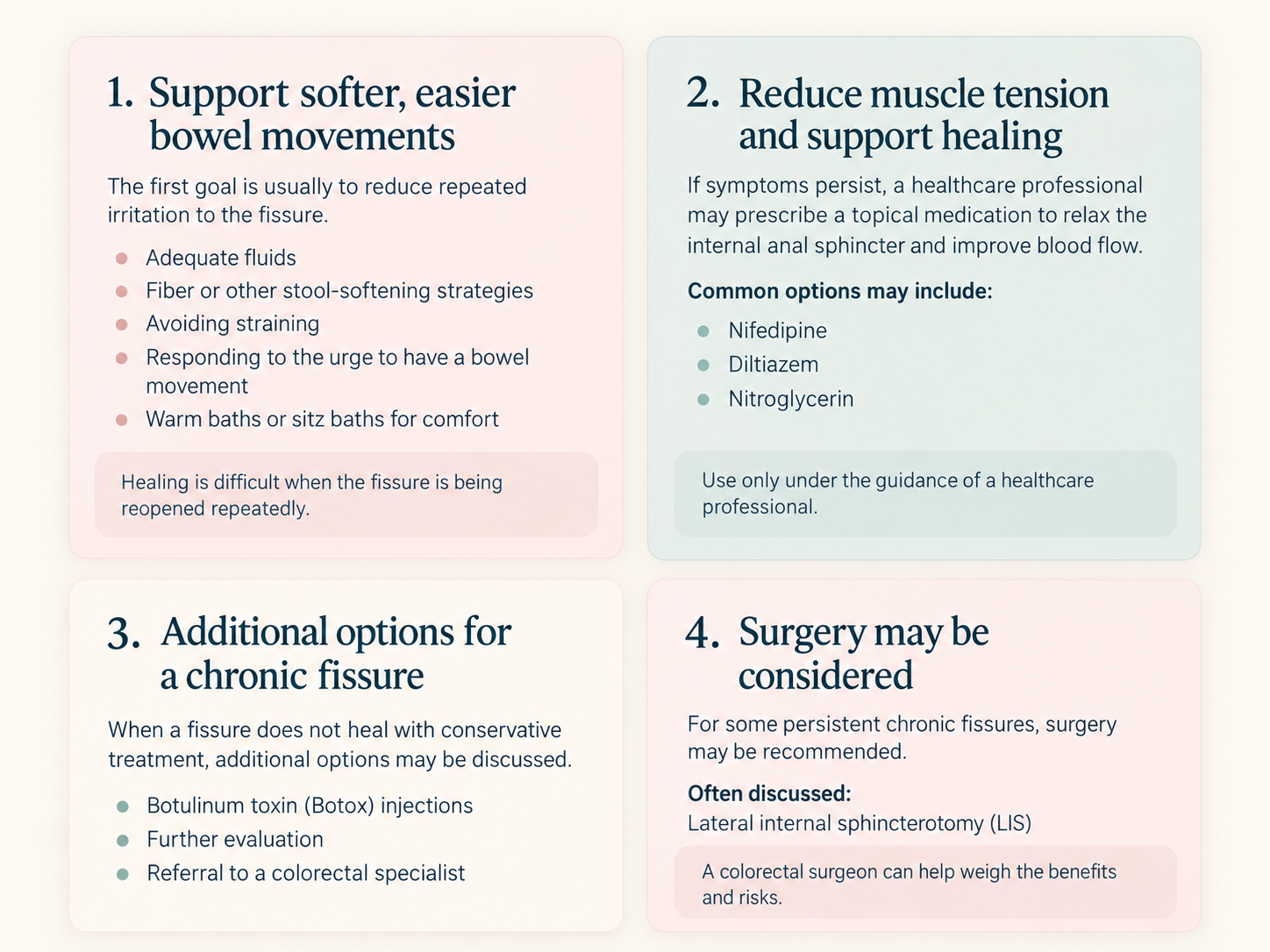
Treatment isn’t one-size-fits-all.
Some fissures heal quickly with conservative care. Others take longer and need additional support. Needing medication, a procedure, or surgery does not mean you did something wrong or that recovery isn’t possible.
Ready for the day-to-day part?
Explore practical support for food, relaxation, travel, routines, and mental wellness.