
Pregnancy + Postpartum Anal Fissures
Pregnancy, delivery, and postpartum recovery can bring major changes to digestion, bowel habits, and pelvic-floor tension. This page offers practical, supportive information for navigating anal fissures during this stage of life.

Why Can Fissures Happen During Pregnancy and Postpartum?
Constipation, hormonal changes, pressure from the growing uterus, delivery, and postpartum bowel changes can all make fissures more likely during this time. For some people, the first painful bowel movement after birth can be especially difficult.
During Pregnancy
Constipation is common during pregnancy because hormonal changes can slow digestion, and later in pregnancy the growing uterus can add pressure to the bowel. Harder stool and straining can increase irritation around the anus and may contribute to a fissure.
After Delivery
The first bowel movements after birth can feel difficult, especially if you’re dealing with perineal soreness, swelling, stitches, hemorrhoids, or fear of straining. Changes in routine, hydration, pain medication, and constipation can also make stool harder to pass.
Pelvic-Floor Tension
Pain can cause the pelvic-floor muscles to brace or stay too tight instead of relaxing during a bowel movement. When those muscles have trouble relaxing and coordinating, it can make stool more difficult or painful to pass and may contribute to a cycle of tension and guarding.
Pregnancy and postpartum fissures are common, but you don’t have to simply push through the pain. Small changes in stool consistency, bathroom habits, and pelvic-floor support can make recovery feel much more manageable.
Gentle Support for Bowel Movements
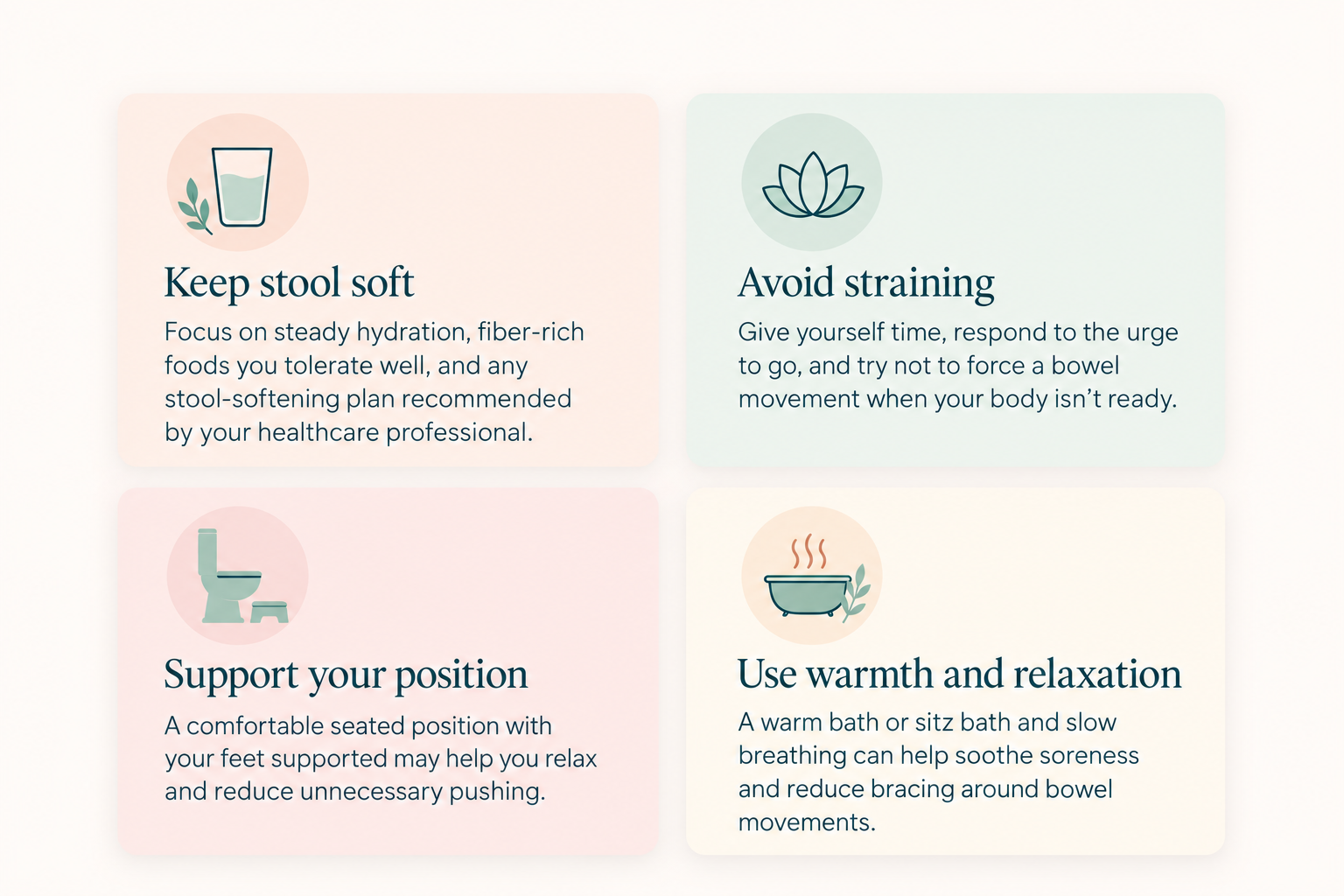
During pregnancy and postpartum recovery, the goal is to make bowel movements as soft, comfortable, and low-strain as possible. Small changes in routine can help reduce pressure on a fissure and make bathroom trips feel less stressful.
If you’re newly postpartum, ask for help early.
Constipation, pain medication, stitches, hemorrhoids, and fear of the first bowel movement can all make things harder. Your OB, midwife, or primary-care clinician can help you make a plan before symptoms become more difficult to manage.
When to Talk With Your OB or Midwife
Painful bowel movements, bleeding, or constipation are worth bringing up, especially if symptoms are persistent, worsening, or making you afraid to have a bowel movement. Your OB, midwife, or primary-care clinician can help confirm whether you’re dealing with a fissure and suggest treatment that fits your stage of pregnancy or postpartum recovery.
Contact your provider if:
Pain or bleeding that keeps happening
Constipation that is not improving
Symptoms that make you avoid eating or having bowel movements
Significant perineal pain, swelling, or concerns about stitches after delivery
Trouble controlling stool or gas, or other pelvic-floor symptoms postpartum
Any symptoms that feel unusual, severe, or are getting worse
ACOG recommends postpartum care that includes assessment of perineal pain and bowel-control concerns, with referral when needed.
You do not need to wait for a routine postpartum visit to ask for help.
Medications During Pregnancy + Breastfeeding
Anal fissure treatments are not automatically off-limits during pregnancy or breastfeeding, but medication choices should be individualized. Tell your clinician if you are pregnant, recently delivered, or breastfeeding before starting a prescription fissure treatment.
Stool-softening support
Your clinician may recommend dietary changes, fiber, or a stool-softening or laxative plan depending on your symptoms and pregnancy/postpartum needs.
Topical fissure medications
Prescription creams such as diltiazem or glyceryl trinitrate (nitroglycerin) are sometimes used to relax the internal anal sphincter and support healing. During pregnancy, clinicians may prefer an alternative or review whether these treatments are appropriate for you.
While breastfeeding
Topical diltiazem and glyceryl trinitrate can be used in breastfeeding in appropriate circumstances, according to NHS Specialist Pharmacy Service guidance for healthy, full-term infants. Wash your hands well after applying topical medication and before handling your baby.